john christopher

You are currently browsing articles tagged john christopher.

To accompany my interview with Sam Youd, this is an article I wrote in 1999 for Circus 8 on Sam’s best known pen-name, John Christopher, under which he wrote such enduring classics as the Tripods and Sword of the Spirits trilogies and The Death of Grass.
 

In a review in the Independent newspaper of Brian Aldiss’ autobiography, The Twinkling of an Eye, John Christopher was said to be one of the five ‘most important British science-fiction writers’. Aldiss himself has often spoken of his admiration for John Christopher, describing him in Billion Year Spree as ‘an intelligent and witty man, marvellously equipped as a writer’. One rarely comes across this kind of recognition, which is a great shame as John Christopher, real name Sam Youd, fully deserves it for his important contribution to British science fiction over the last fifty years.
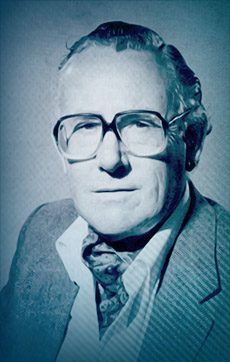
Christopher Samuel Youd was born in 1922 in Knowsley, Lancashire (‘the rural hinterland of Liverpool,’ as he once described it), but left for Hampshire at the age of ten, ‘a manoeuvre which he regards as in a sense equivalent to Dickens’s banishment to the blacking factory,’ where he attended Winchester’s Peter Symonds School. He became interested in science fiction at around the same time, particularly the American magazine stories that influenced the likes of John Wyndham, Arthur C Clarke and Kingsley Amis; he began his own sf fanzine, The Fantast, when he was seventeen. His first professionally published short story, ‘For Love of Country’, appeared in Lilliput in late 1939 (‘It was about an Anglophile German bomber pilot who tried to drop his stick in open country but hit the cleverly camouflaged factory my train passed every morning on my way to my job as a clerk in the County Medical Office at Winchester’). He served in the Royal Corps of Signals during World War II, and seriously turned his hand to writing after he was demobilised in 1946 and working in general publishing, then as assistant editor of a technical journal. Along with a number of young writers who could claim their careers had been interrupted by the war, he was given an Atlantic Award by the Rockefeller Foundation in 1946 (married by then, he was awarded the full £300, but had to promise not to do any non-writing work for a year). His first sf short story and his debut novel both appeared in 1949.

The story was the ‘Christmas Roses’ (published as ‘Christmas Tree’ in Astounding, February 1949, and still being reprinted as recently as 1979). It’s the melancholy story of Major Joe Davies, navigator on the Arkland. Anyone serving aboard a spacecraft is given a medical after landing, to assess the ‘cumulative stress’ on their heart caused by take-off and landing. Some last up to ten years from their first warning until they’re judged incapable of withstanding the strain – then, wherever they are, they’re stuck for the rest of their lives, ‘the exile, the outlaw who left it too late to get back’. Davies arranges to take a Christmas tree up to an old man, Hans, who has been stuck on Luna City, ‘a couple of blocks long, a block wide’, for forty years. While buying the tree, he is struck by the beauty of the countryside around Washington and decides he’ll retire there when he returns, to grow fir trees and Christmas roses. On arriving on the Moon, Davies discovers Hans died the night before; then, worse still, he fails his medical. At the end of the story, Davies mournfully watches Earth and the stars from the lunar surface – ‘I keep thinking I can smell roses.’

‘Christmas Roses’ is an assured and confident story dealing with timeless themes that still has the power to move – in fact, the only way in which time has been unkind is in the story’s talk of lichen and lunar insects that consume the dead. Youd would return to the premise of imprisonment in a lunar station in his children’s novel The Lotus Cavestwenty years later.

The Winter Swan (1949)The Winter Swan (1949) is a mainstream novel, but told in a manner not unfamilar to science fiction readers (of Martin Amis’s Time’s Arrow, for example), A common judgement of first novels is that they were often autobiographical, but he was determined not to qualify in that respect and instead told the story of an old woman named Rosemary Hallam. He then further reversed the norm by beginning the novel at her graveside in 1949, then telling her life story in reverse. Part of the interest of the novel arises from seeing the effect before the cause. Despite this striking originality, the novel was not a critical or commercial success (the Times Literary Supplement grudgingly admitted it was ‘not uninteresting’).

Unperturbed, Sam Youd continued to write mainstream novels in his spare time to supplement his poor income. Now with a family to support, he wrote, in a single draft, realistic and socially-aware novels, ‘penetrating the hidden motives of human behaviour’ (as the blurb of Holly Ash (1955) puts it). There was still the occasional fantasy element – the suggestion that Piers Merchant, the main character of Babel Itself (1951), might actually be the Devil, for instance – but Youd’s interest in sf was finding an outlet in the short stories he was writing at the same time, for sale to such magazines as Galaxy, Science Fantasy and, most notably, New Worlds. Most of them were set in the twenty-second century, where countries have been replaced by mega-corporations called ‘Managerials’; the thought being that entities governed by politics will slowly destroy civilisation, but commercial interests will perpetuate it. Individuality and creativity are no longer treasured. It’s all worryingly prescient. Many of these stories feature the exploits of Max Larkin, a director in one of these corporations, and all but one were written under Sam’s best-known pseudonym, John Christopher. A later novel, The Year of the Comet (1955), is set a century earlier and explains how this situation came about, wrapped up in a clever but wordy tale of Managerial plots and counter-plots.

The Managerial stories are collected in The Twenty-Second Century (1954) and although they are interesting, it’s in the other stories that pointers to future John Christopher themes are clearest.

The end of the world as we know it

In ‘Blemish’ (1953), enlightened aliens threaten to wipe out a supposedly advanced future Earth unless mankind relearns the value of family life from a small rural village it labels the ‘nut house’. We show our true colours in ‘Monster’ (1950), when a peace-loving creature on a mission to save its race is shot as it tries to make contact at Loch Ness. In ‘Begin Again’ (1954), radiation sickness from a nuclear war has wiped us out, and the last man on Earth meets the last woman against a grim backdrop of devastation – I’ll leave you to guess their names. In ‘The New Wine’ (1954), telepathy is induced into every unborn child, who go on to see a side to human nature so ugly they either die, commit suicide or chose celibacy. In short, the world ends, the thin veneer of civilisation removed.

The third John Christopher novel, The Death of Grass (1956), deals with this theme with visceral power. Although The Year of the Comet mentioned how the Managerial system had its roots in a similar disaster two centuries earlier (‘They got the lot – atom bombs, hydrogen bombs, breakdown, disease, famine’), here the author gives us the kind of description of the collapse of civilisation he would become famous for.

A mutant virus that kills all types of grass appears in China, and slowly works its way towards Britain, leaving starvation in its wake as grain crops wither and animals starve to death. Our scientists are smugly confident they can combat it, but the Chung Li virus, as it becomes known, develops new phases with unexpected speed and finally reaches us. John Custance, an architect, is warned by old Army friend Roger Buckley that their families should flee from London to John’s brother David’s farm in the Lake District. Friends in high places have informed him that the British government are planning the extreme step of bombing major cities before the now inevitable suffering and anarchy overwhelms them. Meeting the deceptively courteous gunsmith Henry Pirrie and his wife on the way, they begin a dangerous race for survival across a rapidly degenerating country.

The Death of Grass (1956)The national politics are cleverly and convincingly depicted, but the politics within the small group are more interesting. Roger, initially a major player in the book, quickly falls into the shadow of John as John’s uneasy relationship with Pirrie develops. Although John instinctively distrusts Pirrie, never more so than after Pirrie claims the right to execute his own wife, Millicent, for her repeatedly unfaithful behaviour, they soon learn to rely on one another. Pirrie needs John natural leadership skills, and John’s disgust at Pirrie’s brutal methods turns to a kind of admiration. John, through a series of encounters with violent bands, adopts Pirrie’s survivalist tactics, killing in cold blood whoever gets in his way, dispatching the weak who, by his and Pirrie’s rationale, with die soon anyway.

The author plays a dangerous game by making John, essentially the book’s central character, increasingly unlikable. Essentially, The Death of Grass, like so many of the Christopher novels, is about how normal people are changed and forced to adapt when their everyday lives are pulled from under them. John’s wife Ann asks to shoot the last of the men who raped her and her daughter, not long after expressing horror over the shooting of three soldiers at a roadblock. No reassuring middle-class John Wyndham heroes here.

Different people are affected in different ways, and Sam Youd deals well with the psychological consequences on his characters of their harsh new surroundings. John Custance wouldn’t hesitate to sacrifice weak, ineffectual Matthew Cotter in the later novel A Wrinkle in the Skin (1965), for instance.

A massive earthquake has struck Cotter’s home of Guernsey, the extent of which he is soon to discover. In the first of many memorable jolts to the imagination, Cotter looks out to where the sea was and sees this:

It was like a glimpse of another planet, a strange savage and barren world. He could see the tangled green of the great weed beds, the rawness of exposed rock and sand … The blue sweep of wave was gone. A sunken land was drying in the early summer sun.

He soon falls in with a band of survivors and allows himself to be bullied by their leader, Joe Miller, but remains fixated on his daughter Jane, who was staying in Sussex when the disaster struck. Her chances of survival are practically zero, but Cotter refuses to believe it. He crosses the bed of the English Channel to look for her with a small boy called Billy, a disorientating experience as he feels the sea could come rushing back at any moment. Following a brush with an insane captain aboard a stranded tanker, they arrive at the mainland and soon meet another, more friendly group. Cotter is particularly taken by a woman named April, on the ruins of whose house they’ve made camp, and whose husband and children she reburied in the garden. April would seem to be the ‘love interest’ of the novel, but following an attack by marauding youths comes the second shock of the novel, when Matthew involuntarily reacts with disgust when she tells him she was raped by them, and has been several times before. She tells him:

‘I don’t fear you. But I despise you. I despise you as a man. As a person, I think I envy you… Nothing has changed for you, except the scenery. For the rest of us it was God bringing our world crashing down about our ears, but for you it was – what? An epic in Cinemascope, Stereosound and 3-D. Jane is still alive, and you amble your way towards her through the ruins. Do you know what? I think you’ll find her. And she’ll be dressed in white silk and orange-blossom, and it will be the morning of her wedding to a clean young man with wonderful manners, and you’ll be just in time to give her away.’

Even after this character assassination, Cotter continues on his quest with the boy, Billy. It’s Billy’s ensuing sickness, and the third major revelation of the book (in which we discover what happened to the sea), that finally snaps Cotter out of his fantasy. The book ends on a quiet note of optimism for the future.

The World in Winter (1962) opens by asking us to accept the outrageous premise that Earth’s been tilted a few degrees, plunging Britain into a new Ice Age and forcing people to flee to the now-temperate Africa and South America to become penniless refugees, consigned to live in shanty towns. It’s a clever idea, a reversal of fortunes that contains some serious comments on racism. The frozen London, plunged into the characteristic Christopher anarchy, is a lot more nightmarish than other attempts at the theme (John Boland’s White August (1955), for instance, is more silly than chilly), but the book lacks the raw power of The Death of Grass and A Wrinkle in the Skin.

I’m no great fan of Pendulum (1968), a overly reactionary novel that extrapolates social and political changes that were taking place in the late-60s. In a nutshell, the government abolishes student grants (an uncanny prediction, as it turns out), and in order to bolster their protests the students bring in yobs. Anarchy ensues. The end comes from an unexpected direction: religious zealots overcome the yobs by even more brutal means, and the book ends with a disturbing coda, showing Britain in the grip of these ‘Brothers’, punishing anyone who steps out of line with death or detention to the Scottish islands. The book was written in a climate of ‘youth versus society’, where student riots were rife; a few years before were the seaside clashes between the so-called ‘Wild Ones’, and the papers were full of sensationalised reports on ‘the Unattached’, the groups of young people who baffled officialdom by not being interested in Youth Clubs and the like. Public distrust of the young was strong, and Pendulum is just as guilty by assuming that motorcycle and scooter gangs would have their wicked way with the entire country, given half the chance. I can just about accept tilting the Earth off its axis, but the nature of this catastrophe is even more questionable.

The human race is despatched more ruthlessly in the young adult novel Empty World (1977). Here Sam Youd describes the origins of the novel, and perhaps many of the novels I’ve just discussed:

I recalled a boyish daydream, of thinking how much fun it might be if adults were somehow (painlessly, involving no guilt) to disappear, and leave the world to me and a few like-minded buddies. The joy, for instance, of finding an unattended, up-for-grabs Woolworth store… fortuitously laden with months of back issues of science fiction magazines… The book explored the darker side of the daydream

Fourteen-year-old Neil Miller’s parents have died in a car crash, leaving him to live with his grandparents near Rye (Sam Youd’s home, incidentally), but making him better equipped to cope with what follows: a plague that sweeps across the world, killing everyone around him one by one. It starts with the old, but soon the children find they’re not immune – the plague gives them a wrinkled, aged appearance before death, which makes the loss of two youngsters Neil comes across after he’s sure the virus has gone all the more shocking (‘He stopped some feet away, struggling not to show his incredulity and horror. A little old man stared at him from the face of a child.’). On his subsequent travels to London, Neil encounters only three other people, all children. He follows a message to a house, but finds the boy who wrote it was so consumed by loneliness that he hung himself only hours before. Later he finds a footprint in the Cosmetics department of Harrods and meets a pair of Girl Fridays, one of whom harbours a dangerous jealousy against Neil as he grows closer to her friend. The book is left open-ended, though not deliberately; a sequel was a possibility for a while.

The will to survive is strong in these books, but at the end of each it’s made clear that there are many more ordeals to come, and that humanity has to rebuild more than just its numbers.

The remainder of the John Christopher adult novels are a mix of different genres – thriller, psychological horror, some sf – but they often focus on an small group of people, isolated and fighting for survival.

In The Caves of Night (1958), a party of five people trapped in an Austrian cave system are gradually whittled down to the female lead, and her husband and her lover, and a situation in which she has to decide who lives and who dies. A Scent of White Poppies (1959) is a straight thriller about drug-smuggling (not one of Sam Youd’s favourites – his agent used to refer to it as ‘the dogshit book’ after an office typo rendered the title as ‘Puppies’!). The Long Voyage (1960) has an even more varied cast: dispirited sailors, a travelling circus family (and their bear!), an eloping couple with a typewriter case full of cash – all stranded in the Arctic after a storm cripples their ship. First Officer Mouritzen is a flawed hero typical of Sam Youd’s work: he spends the bulk of the book wooing Mary, who’s travelling with her daughter to marry a Dutchman she’s never met, but then, at a time of weakness, tries to bed circus girl Nadya. The Possessors (1965) concerns a party of tourists confined to a Swiss skiing chalet by an avalanche, under attack from an alien straight out of Invasion of the Body Snatchers.

Most significant are Cloud on Silver (1964) and The Little People (1967). The former reads an an intriguing cross between The Island of Doctor Moreau, Robinson Crusoe and Lord of the Flies. Again it concerns a stranded group of people, this time shipwrecked on a South Pacific island populated by deformed wildlife, and with a mysterious secret at the crest of the mountain that dominates it. Paranoia and mistrust grows, and there’s a science fiction solution, but it’s overshadowed by a climax that’s really very horrid indeed.                 

Equally disturbing is the ending of The Little People. Bridget Chaucey unexpectedly inherits a castle in the wilds of Ireland, and decides to run it as a hotel in the few months before her marriage to Daniel. She finds German artefacts everywhere, a barred room full of doll’s houses, and later a tiny footprint. Bridget and her new guests soon discover the Little People, initially believed to be of Irish legend, but found to be the results of wartime Nazi experiments in Germany. They appear harmless, but it transpires they can use some kind of mind control while the humans sleep to force them to confront unpleasant areas of their past (and future). Waring Selkirk, an American whose marriage has disintegrated into savage rowing, has a vision of himself and his wife a few decades in the future, their hatred more vicious than ever. Daniel proves to be a violent coward who runs away when his fiancée needs his help, and kicks one of the Little People with ‘not just anger, but the need to maim, to kill, to destroy utterly’. Stefan and Hanni Morwitz are hit the worst. He is a German who fought in the war; she is his Jewish wife, who the People feed experiences of a Nazi extermination camp. Stefan is consumed by guilt over his Nazi father (‘on terms of near equality’ with Himmler) and his desire for Hanni’s forgiveness for the atrocities of his people, leaving him in a kind of waking coma. The People themselves are merely catalysts to these events, which prove beneficial to some and devastating to others, and it’s to the author’s credit that he makes such a daft-sounding idea truly menacing.

As well as those under his own name, Sam Youd had also been writing novels under various other pseudonyms: humorous young-adult cricketing novels as William Godfrey; two novels about Felix, ‘the angriest of the Angry Young Men’, and an espionage thriller as Hilary Ford; four thrillers as Peter Graaf, three of them featuring Joe Dust, a private eye with a shady past over from Brooklyn; and a further thriller about Nazi spies as Peter Nichols. Then it was suggested that he should try to pick up a new audience by writing a science fiction novel for children. Futuristic novels no longer interested him (although, perhaps prompted by the excitement surrounding the Apollo missions, he would later write the bizarrely imaginative The Lotus Caves (1969)), so he took his inspiration from the past. The sf novel became a trilogy, and, apart from three Gothic romances written as by Hilary Ford (which he considered a poor attempt at emulating Jane Austen: ‘I have committed many follies, but never that of thinking I was in her league, or capable of promotion to its lower reaches’), he remained devoted to his new generation of readers.

After the Tripods came

The Tripods Trilogy (1967-68)Returning briefly to The Twenty-Second Century, one of its short stories, ‘Weapon’ (1954), provides the clearest preview of things to come. The military use a boy who can see into the future to find out what the ultimate weapon will in a hundred years’ time – it turns out to be the crossbow. Sam Youd’s most famous novels are probably those set on a future Earth that has, for a variety of reasons, reverted back to a medieval, pastoral existence – the first of these works was the Tripods trilogy (1967/68). Generally regarded as the point at which children’s science fiction really grew up, the trilogy is detailed elsewhere in this issue, so I won’t dwell on it too long.

Part of the fun of the novels is their description of twentieth-century artefacts and places that are commonplace to us but mysterious and almost magical to Will and his friends. Early on in The White Mountains his father’s Watch, ‘a miniature clock with a dial less than an inch across and a circlet permitting it to be worn on the wrist’, is a source of wonderment to Will, as is this sign:

DANGER
6,600 VOLTS
We had no idea what Volts had been, but the notion of danger, however far away and long ago, was exciting. There was more lettering, but for the most part the rust had destroyed it.    LECT    CITY: we wondered if that were the city it had come from.

Will and Henry are introduced to maps by Ozymandias, and soon the country of the French, railway lines (the carriages are pulled by horses, but Beanpole envisages a more efficient form of traction powered by a machine ‘like a very big kettle’), and the City of the Ancients, Paris – again, not identified by name, but recognisable from the descriptions of the ruins. Here they find an underground ‘Shmand-Fair’, where, they later realise, Parisians must have made their last stand against the invading Tripods. There’s ‘a rack full of wooden things ending in iron cylinders’ – guns – and a box full of large metal eggs. ‘[Henry] picked one out, and showed it to Beanpole. It was made of iron, its surface grooved into squares, and there was a ring at one end. Henry pulled it, and it came away.’ Of course, there’s tension now for any reader who recognises the description as that of a hand grenade.

The rediscovery of our technology, most crucially balloons and bombs, eventually helps overcome the rule of the Masters, but the coda to The Pool of Fire, set two or three years later, shows that this might not be such a good thing. With the Masters’ suppression of mankind’s instinct to kill each other removed, we’re at each other’s throats again.

The later, modern-day ‘prequel’ to the trilogy, When the Tripods Came (1988), is more juvenile in tone, but nonetheless interesting. Common Christopher concerns resurface, such as families broken by divorce, and children’s resentments of a new step-family. It doesn’t really cast any fresh light on the earlier books, although there is some foreshadowing of events to come, and some nice digs at Brian Aldiss’s criticisms of a three-legged object’s basic inability to walk properly, and the Tripods’ lack of infra-red capabilities.

Following the Tripods trilogy, The Guardians (1970) again dealt with the value of freedom, and won Sam Youd, appropriately, both the Guardian award and the Christopher award for best children’s book, in 1971, and the prestigious German Jugendbuchpreis award in 1976. It tells of an oppressed future Britain in which great fences have been erected around the proletarian Conurbs (towns), where books and free thought are frowned upon. Any attempts to change the system are crushed using brutal means by the powerful Guardians, whose secrets the young hero Rob Randall discovers when circumstances following the suspicious death of his father force him to run away to the aristocratic County (country). A very powerful novel, originally planned, but never written, as an adult book; its themes are about as adult as a children’s book can get. Wild Jack (1974), originally written as an English-as-a-Foreign-Language text but later expanded into a children’s novel (though the latter was released first), is another fight for truth and freedom in a sterile, controlled Britain, with allusions to the legend of Robin Hood. The novel was originally the first of a trilogy – indeed, the follow-up was written but not released. Similarly written as an EFL text, Dom and Va (1972) is set half a million years ago, the grim tale of the conflict between a tribe of hunters and another, more culturally advanced tribe. A scene in which Dom tries to beat his female lover Va caused controversy with feminists, despite that fact that she thwarts the attempt – as a female colleague pointed out to Youd, Va is depicted as cleverer and more characterful than Dom, and gets all the best lines.

There’s a great deal of human ugliness in the Sword of the Spirits trilogy (1970-72) too. Again the setting’s a future England regressed to more primitive times, this time by volcanos and earthquakes, and an increase in solar radiation which has caused genetic mutations, known as ‘Polymufs’ and used as slaves. England is apparently under the power of the machine-hating Spirits and their human servants, the Seers. Luke Perry, Prince in Waiting to the city of Winchester, sees everyone he loves die around him, through treachery and deceit, during the course of the books, including his own brother at his own hand. He discovers the Spirits are faked by the Seers, who actually seek to reintroduce machinery and electricity, and see Luke as the ideal ruler for this aim. Luke falls in love with ‘Wilsh’ princess, Blodwen, and her father promises her to him, but her love is for his best friend Edmund. When he finds out, his stupid reaction gets him exiled from the city in disgrace. Luke’s wounded pride makes much of the final book uncomfortable reading. He gathers an army around himself, armed with lethal Sten guns made from specifications provided by the Seers, and fights for his honour and his title. Luke is determined that Edmund and Blodwen should die and Winchester should suffer, but blind to how wrong his actions are. Whole armies are slaughtered in the pages before the downbeat ending.

There are obvious allusions to the legend of King Arthur, from the sword Luke is presented with, to the play which triggers Luke’s suspicions of Blodwen’s true loyalties, based on the romance between Sir Tristram and Ysolde. A further short story, ‘Of Polymuf Stock’ (1971) is set during the events of the trilogy, and the most recent John Christopher novel, A Dusk of Demons (1993), returns to the theme of a controlling, but ultimately fake, religion created by those who seek to preserve, and eventually bring back, old-time technology, as the ending (reminiscent of John Wyndham’s The Chrysalids) reveals. It also has another post-catastrophe background, society having crumbled after being afflicted by a machine-fearing ‘Madness’. To anyone who writes this off as ‘kids’ stuff’, here’s the description of the eponymous Demons:

I saw a writhing tangle of shapes, winged and scaled and slimy, rotting faces oozing filth, hideous reptilian arms stretching out … reaching down to grasp me

Like The White Mountains, Fireball (1981) was conceived as a standalone novel, but the author returned to the story when another novel, a fantasy version of Arthurian legend, ground to a halt. The Fireball trilogy (1981-86) is an interesting alternate world story, which sees two cousins, the British Simon and the American Brad (again from broken families), transported by a strange fireball to a brutal Europe where the Romans still rule and slavery is common. Unwillingly swept along by the course of events, the boys realise that this ‘If’ world isn’t confined to Europe, and their adventures take them to the Americas and a China torn apart by civil war. Fireball, the first novel, starts off well, but most of the characters and bloody later events are told too swiftly to evoke much sympathy. The two central characters are interesting though, clashing personalities who often find themselves at loggerheads, and, by Dragon Dance, the best and most colourful of the trilogy, they’re even fighting for opposing armies. But during the trilogy’s three year time-span they realise they have more in common than they first thought.

The aforementioned A Dusk of Demons is Sam Youd’s last novel to date. As he describes in the following interview, he has attempted – and sadly failed – to interest a publisher in his memoirs. Also, since Dusk, a lifelong interest in Arthurian legend prompted him to try his hand at an adult trilogy told from the viewpoint of Marius Linus (aka Merlin); the first book would have culminated in a young Arthur seizing the sword from the Stone – but lack of time and the problem of finding a publisher in the difficult historical field intervened, and the project ground to a halt at Chapter 6 without even being given a title. Another novel, a futuristic adult ‘Eurothriller’ called Bad Dream, was completed a few years ago but not picked up by a publisher. I’ve been fortunate enough to read the first chapter, and can only say it would be a tragedy if the book isn’t published in one form or another (at the time of writing, there’s the possibility it might appear on the Internet at some point).

I hope that’s not the end of the story.

The adult novels are uncompromising, but Youd makes few concessions for children either. Not once does he talk down to the younger reader; his themes are every bit as sophisticated as before. At the heart of each of his books is solid storytelling and humane values, related by well-drawn characters we can all identify with, struggling in a world that’s falling apart around them. Whereas the running theme of the best adult John Christopher novels is ‘What happens to ordinary people when the props of civilisation are removed?’, in his children’s books the props are the other kind: the initially safe world of the lead characters is revealed to be a facade, usually stage-managed by evil or misguided oppressors. If this leads the young reader to be wary of institutions – whether they be governments, religions, or any other established edifice – to ask questions, then that’s just one achievement for which Sam Youd deserves the praise that opened this article.

Tags: , , ,

Christopher Samuel YoudWith the release of the BBC Tripods series on DVD and the promise of an Alex Proyas film adaptation, I thought this interview with the trilogy’s prolific author, conducted in 1999, might be of interest. I’d never interviewed anyone before, and found Sam incredibly generous and a true gent.
 

Were you a fan of science fiction from an early age?

I started to find SF fascinating in the occasional story in more general boys’ magazines, then discovered the (I think) September ’32 issue of Astounding and was totally hooked. Before that though I had been very fond of Coral Island and Swiss Family Robinson, both of which have characters with whom a boy can identify in – this is the important bit – exotic but at the same time possible settings. As I’ve often said, 30s SF offered extrapolation from current scientific thinking – not entirely and certainly not reliably, but one could fool oneself one might eventually find life on the planets in the way the Swiss Robinsons found that amazing (and quite impossible) variety of plants and wild life on that tiny Pacific island. I tell myself I turned away from SF when later scientific knowledge showed the solar system to be a barren emptiness and extra-planetary travel just wasn’t feasible. But I feel it was also like being through an intense love affair: the passion can’t be resurrected.

When did you decide you wanted to be a writer?

I started developing ambition in that direction at around ten, when I started an (of course) SF story which I never finished.

Who were your earliest influences?

Well, I did get round to reading better writers like Wells, but it was US magazine fiction which influenced me most – I detect echoes in, for instance, The City of Gold and Lead.

I was interested to discover that the writer of fiction you most admire is Jane Austen. Your books have always illuminated character – the human condition, as it were – as Austen’s do. Does this interest you more than scientific extrapolation?

I very strongly feel that the important and useful exercises of imagination are related to ‘the human condition’ – that Jane Austen’s imagination is stretched at a far higher level than, for instance, Arthur Clarke’s (sorry, Arthur). To me in my late years it seems self-evident that relationships are the root of existence, scientific extrapolation a pleasant toy.

And you were a fanzine editor?

John Burke’s publication of The Satellite influenced me to try my hand with The Fantast: hard sweat on a flat-bed duplicator with all that bloody stencilling … and a wild attempt to make it look professional by creating a justified right-hand image. The way I worked this out was by typing two drafts. On the first I finished several characters short of the right-hand margin and filled the gap with exxes; on the second I interpolated the exxes required as extra spaces between words. Nowadays you press a key. Old men, alas, remember. After I handed over Fantast to the more organized hands of Douglas Webster (and what became of him?), I fooled about with those other transitory efforts, before and (I think) during Army service. Popular? I think I had a mailing list of ca. 80 (or was it 60? – time magnifies) which wasn’t bad, when you remember I charged 3d (1.25p) per copy, and the mailing cost was 1.5d. Popular within the narrow circle of 30s UK fandom? Maybe. We were not so popular with the London establishment – Ted Carnell, Frank Arnold etc.

What did you do during the war?

I was Royal Signals, a Signalman throughout. We were a field intercept unit, in Gibraltar, then North Africa and eventually Italy. At the war’s end we were stationed at Predappio, in the castle Mussolini had built overlooking his humble birth-place – or rather, officers were in the castle, we were in tents in the (dry) moat. I nicked asparagus from his kitchen garden and had my 23rd birthday there: we got roaring drunk in the nearest town where we picked up a Polish Sgt-Major, who took us to his unit for disgusting rissoles and came back with us for more booze. He had sons fighting on both sides, and was keen on carrying the failing war on to Moscow: we, after over three years overseas, were less keen. It was there we found the Germans suddenly going from code into plain language, and I took down a message from Kesselring to the troops, starting: ‘Der Fuehrer hat ein Heldentod gefunden …..’ ['The Fuehrer has found a hero's death...'] A few days earlier they’d hanged our absentee landlord from a lamp-post in Milan, but this meant it really was all over.

You sold your first SF short story in 1949, and in the same year The Winter Swan was published. How did this first break come about?

Having fallen out of love with SF, I had an ambition to write general fiction and was encouraged by getting an Atlantic Award from the Rockefeller Foundation when I was demobbed. So Swan. But I was married and broke, hence stories aimed at the US magazine market.

Isn’t there a strong suggestion of reincarnation in The Winter Swan?

Swan wasn’t about reincarnation, in which I have never been able to believe (my eldest daughter, a Buddhist nun, has different views). If anything, it related to an outdated suggestion by Ouspensky (I think) that we are four- dimensional creatures, the fourth being (of course) time – and that at the end of our lives we lumber away into infinity burdened with every moment of our earthly existence. My chief character was interacting with other such entities, as part of a learning process.

Until you were able to write full-time in 1958, what other jobs had you done?

After my two years with an Atlantic Award, I got myself a job with the Diamond Corporation, as assistant to the Director of their Industrial Diamond Information Bureau. I knew nothing then about diamonds, and not much more when I left them, nine years later. But I could write and edit reasonably in English, a necessary skill in an office run and staffec by central European refugees. When my boss had his first stroke I carried on, and when a year later he had his second Head Office (in Johannesburg, 8000 miles south) didn’t know what to do. The London office, in desperation, asked if I would stand in on interviews for his successor; and subsequently recommend. I did, and three days later they asked if I woud take on the job. I agreed, for a quite pleasant year, and then sold Grass to MGM. In many ways I was sorry to leave.

Did you write under so many pen-names to avoid being pigeon-holed as a science-fiction writer?

Well, no, I didn’t want that pigeon-holing: John Wyndham and I both took exception to it. But also I knew of no publisher who would take my output (four books a year in my spare time from the office for 2/3 years) under one name. And the Trades Description Act featured too. I could well imagine the disappointment, nay disgust, with which someone who’d liked Malleson at Melbourne found himself reading Felix Walking or Dust and the Curious Boy. Labels are useful.

As well as science fiction, and the more realistic novels published under your own name, you’ve written light comedies, several thrillers, historical romances and gothic horror – which genre did you find the most rewarding?

They were all rewarding in their own way. The only one I now recall as a bit of a chore was the only one in which I picked up an idea offered by someone else, in this case an old Army buddy – about a German spy coming in from the war-time cold and deciding he’d prefer to opt out of service and stay in the UK. That was the Peter Nichols thriller. On that pen-name, it was meant to be Peter Nicholas (Nicholas being my first-born) but the UK publisher wanted Nichols. The real Peter Nichols was unknown at the time, but I’d like to apologize retrospectively.

I was interested to read that, prior to the Tripods trilogy, you wrote all your books in a single draft. Are there any novels you now wish you could have spent more time on?

What I did was type the first chapter without carbons, then put in three carbons for subsequent chapters, and at the end re-type that first chapter with three carbons (two copies for possible publishers, one for the UK agent, one for file). In those days I reckoned that, ref Ben Jonson’s observation on WS, I didn’t need to blot a line. Since some of my more successful books were done this way, I can’t say I had great regrets about my slipshod method. I’m sure a lot of slack writing got through. I was given the chance of revising the Tripods books when Puffin took them over, prior to the BBC TV series, and accepted it gladly. Book 1 had been rewritten twice, at publisher’s behest, Book 2 once. Book 3 was taken as sent by both UK and US publishers. That was where I found extensive revision more necessary. I’ve twice suggested to the US publisher that, after 30+ years, they might reprint with revisions, but they have refused. So all one can say is that the Penguin UK version is the authorized one.

How long would it take you to write a book?

It varied. Fastest was The Burning Bird – less then four weeks for an adult novel. I used to work on a basis of ten pages, 2500 words a day, on a five-day week, so first drafts of children’s books (ca 45,000 words) were about four weeks. I used to play snooker in late afternoon and would not go to the club until I’d done my stint – not unsurprisingly I found my rate quickened in the afternoon.

What advice would you give to aspiring writers who are just setting out?

I don’t think there is any practical advice: you just have to keep at it. Swan was sold to the first publisher who read it – as I later realized, a fluke. My second novel went the rounds for over two years before being taken by the firm that had already taken my third. When children ask me this, I offer two suggestions: to read as widely as possible (not just what takes your fancy) and to practice continuously, through a diary if nothing more constructive comes to mind. What you need most of all is stamina. Apart from luck, that is.

Although you did the complete opposite in The Winter Swan, would you recommend the old advice of ‘writing about what you know’ to a new writer?

Probably yes. Having said that, an early Christopher, The Caves of Night, picked up one review which said (roughly) John Christopher may not be much of a writer but he certainly knows his caves. I’d read up speleology intensively, and never been in any caves apart from Cheddar. Acknowledgements to the Lambeth Public Library. And a Guernsey resident commented (re World in Winter) that she was amazed how well I’d portrayed Lagos. I’ve never been to South Africa either.

I’d like to ask you some questions about the ‘catastrophe’ novels you are perhaps most famous for. It has been said you’ve killed more people (in your work!) that any other writer: the human race has met its doom by radiation sickness (‘Begin Again’), sterility (‘The New Wine’), starvation and hydrogen bombs (The Death of Grass), freezing to death (The World in Winter), earthquakes and volcanos (A Wrinkle in the Skin and the Prince in Waiting Trilogy), alien invasion (The Tripods Trilogy), plague (Empty World), madness and starvation again (A Dusk of Demons) … What draws you back to this theme time and again?

I don’t know the answer. A blinkered mind may have something to do with it. I’ve tended to follow von Clausewitz’ advice not to reinforce failure, and maybe consequently over-reinforced (moderate) success. And I’ve tended generally to go in for situations where a few characters react under stress: those are all very stressful scenarios.

Those novels are often mentioned in the same breath as those of John Wyndham. Do you admire his work, and how do you think your approaches to similar themes differed?

Nice to be mentioned in the same breath. I did indeed admire his work. Someone recently (very generously) classed me among the five major British SF writers of the century – there was a special glow in that John and Olaf Stapledon were two of the others. As to approaches to similar themes, some other one described John’s as ‘cosy’ catastrophes. Not true, but his characters are pleasanter, and he plainly likes them more. But he himself was one of the nicest and most amiable of men. The only sour note I recall is in that short story, ‘Survival’, where a horror of the female seems unexpectedly to emerge. He was educated at that (then) advanced public school, Bedales, which was a pioneer in co-educational boarding, and which one would expect to help its pupils overcome the normal (English – male) inadequacies. In fact he was terribly shy with women, and didn’t marry until he was over sixty. He then retired to Petersfield, within walking distance of the school. Life is strange at times.

What was the inspiration behind The Death of Grass?

It’s unusual to be able to recall what started a book off, but in the case of Death of Grass it happens that I do. I’d read a book by Ward Moore, Greener Than You Think, about a grass which took over the world, growing everywhere unstoppably. I seem to recall a final scene in which the characters take to the ocean, only to find grass growing up through the deck planks. I wondered about the reverse; and then thought about what ‘grass’ involved – e.g. the wheats and such.

A Wrinkle in the Skin is, I think, my favourite of all your novels. The imagery is so striking, particularly the drained seabed littered with dead fish and stranded ships, and the characterisation of Matthew Cotter is particularly strong. What gave you the idea behind this novel?

I think it is probably my favourite of my adult novels. As to idea behind, I was living in Guernsey at the time and notions of  separation from the mainland would be strong. But I think impetus also derived (as so often) from 30s SF: anyone else remember Jetta of the Lowlands? I had a big American fan for that book, and women generally seem to like it more than my other stuff. This one was a screenplay writer in LA. I gave her a free option for years, and in return she sent me Gourmet Magazine. She later joined the newly launched Playgirl and offered me copies (in a brown paper wrapping). I didn’t respond, but she eventually sent me one, with the male genitals hidden by pasted- on fig leaves of different sizes (depending on the picture magnification). My youngest daughter then eight got hold of it from my desk, and tore the fig-leaves off. The American lady never sold the screenplay.

Like so many of your lead characters, Cotter could not be classed as a ‘hero’ – he’s rather ineffectual, spending most of the book searching for his daughter and refusing to see the larger picture. It’s a running theme of your catastrophe novels, how different types of people adapt to the challenging new world they’re thrust into – shades of Ballantyne and Wyss again?

You’re probably right about Cotter; maybe that’s why women like him better. As to my other main characters being wimps, I’ve never thought about it. Autobiographical? But I do think Ballantyne and Wyss go quite deep with me. And then 30s SF.

I don’t think they can be classed as wimps as such, but most of them have major flaws. For example, it’s Luke Perry’s wounded pride at being rejected by Blodwen that causes so much bloodshed in The Sword of the Spirits.

Big difference between wimps and flawed characters. I don’t see Luke as a wimp, but his pride certainly damages him, and everyone else. And there’s the question of honour. This is not taken as seriously as when I was young (for instance, Hugh Dalton resigning as Chancellor after he inadvertently allowed a reporter to scoop his Budget speech) but in Luke’s world it matters.

Your writing suddenly changed direction in 1967 when you began writing almost exclusively for children. How did this come about?

My agent, David Higham, passed on a suggestion from Richard Hough, at Hamish Hamilton Children’s Books, that I be commissioned to write for them. I’ve never accepted commissioning, but I thought I might have a try. (Around that time Avram Davidson mentioned he’d been told that children’s books were a good bet, in that (if you found a publisher who’d keep them in print) you could pick up a new audience (in the 11-14 age bracket) every three years. Years later he wondered plaintively why he hadn’t taken his own advice.) I wrote The White Mountains, and Dick Hough accepted it, though interestingly on somewhat inferior terms to those proposed originally. It went to my US agent, who sent it to Macmillan. Susan Hirschman, their editor, wrote a long letter which he sent on: she said it started great and then fell apart. I thought of telling her to get stuffed, then looked at the book again, and realized I’d been thinking ‘Well, it’s just a children’s book.’ So I rewrote after Chapter 1. She said the middle was still wrong, and I re-wrote again, Dick Hough accepted all three versions as they came along. That was when I began to realize that, in the right hands, editing in children’s books was much more serious than in general fiction (by that time I suppose I’d had close on twenty adult novels published). On City of Gold and Lead, she just required a re-write of the opening. On Pool of Fire, she cabled ‘Great!’ to the first draft. I thought I had it licked. I went into The Lotus Caves with confidence … and she told me it was a mess. I said OK, write it off. She wouldn’t have that. By now a great pal of Julia MacRae, who’d replaced Dick Hough, she flew to London, had me flown over from Guernsey, and sat us all three down in Julia’s Bayswater flat with the grim message that no-one would move until we got a solution. Julia put in the breakthrough, hence my dedications of the UK and US editions to Susan ‘For flying to the rescue’, and to Julia ‘for the spark that broke the log-jam’. Incidentally, at the point when I was abandoning that book I did my bit of going to Herm for the day to relax/work things out, and it occurred to me an old idea, meant as an adult book, might work in the younger genre. That was The Guardians.

How does writing for a younger audience compare to writing for adults?

As I’ve suggested, more disciplined. Other than that, I don’t think I do anything different except leave out sexual entanglements.

Did The White Mountains begin life as an adult novel? Indeed, was it conceived as the opening book of a trilogy?

No, The White Mountains was conceived all along as a children’s book. The Guardians was thought of as an adult novel but never written. The Prince in Waiting was actually written as an adult novel (and I think the typescript is about somewhere), as the option novel for Michael Joseph after The Year of the Comet. Clemence Dane, MJ’s editor, didn’t like it. I put it aside and wrote The Death of Grass, which she did like. As to being planned as a trilogy, well no. I think I knew there had to be a sequel, but when I finished it had not myself worked out what the Tripods were.

Were the Tripods inspired by H G Wells’ Martians?

It may be hard to believe this, but I’d forgotten Wells’ Tripods until after the book was taken. I then set out consciously to adopt a more logical approach. Wells’ Tripods had been used by ‘spider-like creatures’. I wondered (then – and like anyone who’s tried to make them work on film) how they actually progressed … and for that matter, why. If Wells’ Martians had been copying a body-image they would have used eight-legged crawlers (which would have also been more efficient). From the Tripods I developed the Masters and their triangulated city. I also thought of the stilt-men of the French marshes, and gave them a marshy steamy planet as their point of origin.

There’s a great sense of geography in the trilogy, and the level of detail suggests you know the areas the characters travel through very well. Is this the case?

No. I used (large-scale) maps. Wherton is near Winchester, but not a particular place. Rhymney is New Romney, though I’d at that point never been there. But I had been to Switzerland, and had been up that extraordinary railway to the Jungfraujoch.

Was the ‘Chateau de la Tour Rouge’ in The White Mountains a disguised Fontainebleau?

Again, no, just an idealized chateau (and I’m not a chateau-man). Richard Bates, who produced the BBC TV series, used Alan Clark’s castle at Saltwood, superimposing a French chateau roof-line (Clark mentioned this in his Diaries, scathingly but appreciative of the money). We went there for some of the shooting, and I remember Jane Clark telling us about their idiotic peacocks, which roosted high in the trees and got blown away every gale: ‘the air is full of gusting peacocks’. Don’t know if she mentioned that to Richard: I wouldn’t have been able to resist working it in.

Similarly, were the limestone caves in The Pool of Fire (and, indeed, The Caves of Night) based on the Hallstatt caves in Austria?

Again, alas no. I was stationed at Frohnberg at the end of the war, and there was a trip to the caves for which I booked. But the truck left without me, and I never got to see them.

The Swiss mountains, most spectacularly the Jungfrau in the Tripods trilogy, would seem to have made a great impression on you. When did you first visit the area?

I lived with my family in Switzerland for a year between 1958 and 1959, and in that time visited the Jungfraujoch, which certainly was impressive. I recall setting out around 5 a.m. to drive to Interlaken (where the railway starts), and arriving at the top some seven hours later, ravenously hungry. There was, of course, a restaurant at the top (these be Swiss mountains) and I raced for it. When my main course arrived I found among the cauliflour the largest boiled caterpillar you could imagine. I drew the waitress’ attention to this and she apologized. Later I saw her go to the serving hatch and observed her in convulsions of mirth with the kitchen staff. I suppose it was funny: carting a caterpillar up to 11,000+ feet to feed to an English tourist. But I’d lost my appetite.

Before I ask you about the TV adaption of The Tripods, can I ask if you had any say over the film adaption of The Death of Grass? Having seen it, I would guess not! Did you sell the rights to any of your other books?

You guess right. Before it came out my London agent told me Cornel Wilde had said this was going to be the Great Anti-Pollution Movie, and there would be a book-of-the-film to punch the message home. He was disabused of that. I’ve never seen it. Years later it was shown on TV, and I thought I might manage it from my own armchair, with a comforting glass of whisky on hand. I lasted to the first commercial break, then went to bed. More recently still, someone gave me a video. I haven’t watched it. Rights were sold for a quite modest sum for The Possessors, and for a long time after I averaged a new inquiry a year; but it never got made. Most inquiries come to nothing, of course. Bavaria did The Guardians as a 6 x 50 minute serial, in German but with bits like ‘Please’ which don’t work well with lip-synch in English (and with some English characters). This was when Richard Bates was making The Tripods. He scrupulously sent advance scripts and asked for comments and thanked me for them, but took no notice. The Germans did none of that but asked my wife and me to Munich during a late stage of production. I found, to my amazement, that unlike RB they had followed my story line rigorously. One lady said anxiously that they had had to make a change. At the point where the boy sees a squirrel cross the fence and realizes it cannot be electrified as he’d feared, they used a cat instead. ‘We are very short of trained squirrels in Germany, Mr Christopher’. Yes, I too think she was sending me up. That same company, which made the magnificent Das Boot, also did Empty World as a 90-minute teleplay. A schoolgirl wrote to say how shocked they had all been, that a book they had studied in school should be turned into a piece of ‘Kitsch- Horror’. Bavaria sent me a video of The Guardians, but wouldn’t send me one of Empty World.

Is there any news of Touchstone’s film version of the Tripods trilogy?

I’m not sure what’s currently happening on the movie front: I was told three months ago there was a script in and I’d be sent a copy, but nothing has happened since. I’m aware of a basic problem with the Tripods-as-Movie in that producers tend automatically to regard it as (futuristic) SF. From that standpoint nothing is lost and vast box-office advantage is to be gained by transferring the setting to North America. I’ve no idea whether Touchstone are looking at it from this viewpoint – Jerry Hellman, whose higher than usual sensitivity may be judged by his having produced Midnight Cowboy, had that notion, and actually took the trouble to come to Rye to convince me of its necessity. I wasn’t convinced, but knew better than to argue. Having failed to raise the necessary cash he later told me he was going back to the original setting. It still didn’t work – American financiers are extremely reluctant to put up money for SF films based outside America.

Yet the feedback I’ve had from (overwhelmingly American) children over more than three decades shows that what they most like about the books is the unnerving feeling of being in a historical set-up, incidentally lit by monstrous flashes from some mysterious future: predominantly it’s the mix of past and future which grabs them. And unfortunately the USA doesn’t have a past in the European sense. There’s no mediaeval background to relate to: transferring the Tripods across the Atlantic would be like setting Robin Hood in New England. (Americans are in fact entirely happy about foreign settings for historical movies, eg. Braveheart.) And unless it’s done as basically historical rather than as routine SF, my feeling is it won’t work.

I understand Richard Bates bought the rights to the Tripods books fifteen years before the TV series, just after you wrote them?

Not true. There were four options, over a period of something like ten years; Richard Bates as associated with the first of these and was solely concerned with the final one which actually resulted in production.

Did you ever have the option of adapting the books yourself, or is scriptwriting not an area that interests you?

I don’t think it was ever suggested as such. Richard did try to get me interested in writing for TV generally, and observed that he’d never encountered such negative selling of potential skills. I’ve always felt that it was a specialist technique which (unlike for instance writing in English-as-a-foreign-language) has not engaged my interest. I think probably I was put off anyway by the prospect of having to work in with someone – director, producer, co-writer, actor – eventually. I’ve always been a bit of a one-man band.

As I understood it, you and Richard Bates worked together to develop the storylines for the television series, but you’ve suggested in a previous answer that this was not the case. Were none of your suggestions taken up? Which of the changes to the books were you dissatisfied with?

No, there was no co-working, and I wouldn’t have been much good if it had been offered. (See above). Richard very courteously sent me scripts in advance and solicited comments. I don’t recall that he used any. Contrariwise, Bavaria who at roughly the same time did a German-language version of The Guardians, sought no help but, as I discovered when they asked Jessica and me to Munich during final filming, had scrupulously followed the story line. Richard (and Alick Rowe) followed the story line reasonably well for the first half dozen episodes, at which point Richard explained that they had run out of location time and would have to concentrate on studio work, and that he proposed introducing a few new characters. I’d already realized that the books were too boy-oriented for the then current climate, so wasn’t too surprised when a Scots woman married to a French vine-grower appeared, with daughters. I thought five of them was a bit OTT, though. So again I wasn’t surprised at the girls turning up in the second series, though I thought taking their names from Mozart operas was a little absurd.

Was the BBC’s visualisation of the human characters, the Tripods, the City and the Masters at all like you imagined them?

I didn’t have any serious objections to any of those. The boys may not have been  brilliant actors, but they were nice guys. I remember the lad who played Will complaining about having to learn to ride a horse, and swearing when it stood on his foot when they were shooting locally. It then distinguished itself further by defecating on camera.

Overall, what did you think of the two series, and why do you think they ultimately failed?

After the reasonably faithful book-replication at the beginning, I was probably bound to find the increasingly wide divergences irritating. My (I think reasonable) guess was that someone (Richard?) thought he could improve things by following a more orthodox science-fiction path – hence the Cognosc. Since I had grown out of orthodox SF many years before, I just thought it silly. The second series got so far off my path that I just couldn’t recognize it – all that circus stuff … And it wound up on that downbeat episode which (I was told) had been copied from one of the Star Wars films (I haven’t seen any of them) – with the aim of introducing a hook that made a third series inevitable. As you know, it didn’t work. I was told at the time that the first series had an audience of ca. 6.3 million, the second 5.1. There was certainly a decline in viewing figures, but whether other factors were involved I’ve no idea. The premature closing didn’t bother me, though naturally I missed the associated book sales. (The day of the first episode, Julia MacRae, who had edited the UK side, called me, and said:  ‘Never mind the television – with luck you’ll sell more books.’)

How did the prequel, When The Tripods Came, come about?

At some point during the first series, the Beeb did a discussion thing which included Brian Aldiss as a panel member. Brian started by saying he didn’t like ‘backwards-looking science-fiction’ anyway, and then went on to pour scorn on the notion of the Tripods being able to overcome late 20th century human technology. ‘They don’t even have infra-red’, he observed caustically, presumably referring to the use of searchlights in tracking the boys. (This is an interesting example of the built-in obsolescence characteristic of SF; when I wrote the books infra-red was laboratory stuff, and no one would have predicted that sixteen years later you would use it casually to switch channels on your TV. The first remotes – do you remember? – were in fact photo-optic). Anyway, I did recall that the improbability had concerned me even when I was writing The White Mountains, and that I had dropped in a casual reference to TV being used as the chief instrument of conquest. So I went back and developed that. Incidentally, in both cases there’s yet another harking-back to thirties US magazine SF – a story about someone achieving a hypnotic conquest of the world – through radio …

Is ‘The Trippy Show’ a criticism of television’s effect on children? Also, does its cartoonish nature perhaps refer to the BBC’s Tripods?

I suppose the whole book is a comment on television’s effect on people – not just children. There was no specific reference intended to the BBC’s Tripods. Actually ‘The Trippy Show’ as I suggested it was more complex than anything I’ve yet encountered, a mix of ‘cartoons, live action, stills and abstracts’ (as I’ve just gone back to check). The serious influence of TV cartoons on adults (The Simpsons, King of the Hill) was then unthought-of.

Apart from three Gothic romances, you’ve written exclusively for children for over thirty years. Did you have no urge to return to writing for an adult audience?

The young adult audience basically satisfied me. It was reasonably successful and provided much more feed-back than the adult had. There was the occasional unsuccessful divergence, e.g. a memoir, which the two or three publishers who saw it didn’t care for. (You need a name, or reputation, to justify a memoir in the increasingly harsh publishing scene). A few years ago I did have an idea for what seemed a worth-while return to adult fiction, and indeed wrote it. It went first to Hodder, under an option then a quarter of a century old. Nick Austin who handled their SF side at the time said he felt that qualified for the Guinness Book of Publishing Records. He also wanted to publish it, but his board over-ruled him. (‘There was only one other guy who knew who you were, Sam, and he was even junior to me.’) I tried it around subsequently, but no one else wanted it. It’s a tough world these days.

It’s been far too long (six years) since A Dusk of Demons. Do you have any plans for further novels or short stories?

No current plans. My wife has been in poor health recently, which makes it difficult to concentrate. So does old age.

As the fiftieth anniversary of your first published novel approaches, what do you think was the greatest achievement of your writing career, and which of your novels do you look back on with most fondness?

I think the greatest achievement was maintaining the stamina to go on, with a few minor successes and many more setbacks. Looking back with fondness, in adult fiction it’s probably A Wrinkle in the Skin, in young-adult the Sword trilogy – though there I also have a lingering fondness for Dom and Va. That was written first in EFL, Stage 2, re-written as a children’s book. In the first form it stayed in print in the UK and US for well over a score of years. In the latter, it was quickly destroyed by ardent feminists and never got into paperback. (Puffin paid me a contract cancellation fee higher than their [modest] advance, to get out of the deal). It continues in two areas in the US, where women teachers with my blessing photocopy it for use in schools.

Do you get much feedback from your readers?

Quite a lot from children, chiefly US children. It’s a big change from adult novels, where the one I best recall was a postcard saying (roughly): ‘On page whatsit you have a character bend down to sniff a Frau Karl Druschki rose. The Frau Karl Druschki has no scent.’

Who, or what, makes you laugh?

An awful lot of things make me laugh, including at the moment the spectacle of a Prime Minister helping hound out of his job a semi-literate England football coach who has insisted on expressing his belief in some semi-digested bits of Buddhist thought. (Perhaps I should add that I regard Buddhist thought as philosophically primitive compared with Christianity). I like word play, and journalistically enjoy such writers as P J O’Rourke and Mark Steyn. But I’ve never taken to P G Woodhouse: there I pick up the verbal ingenuity but can’t tune into the basic facetiousness. Back to Jane Austen: she makes me laugh.

Finally, are you optimistic about the new Millennium, and do you think expensive projects like the Dome are a worthy celebration?

I’m neither optimistic nor pessimistic about the Millennium, seeing it important only as a trigger for nut-case enthusiasms which are always latent. As far as the Dome is concerned, I’d say Bring Back the Skylon. (I didn’t like that, either, but I was half a century younger.)

Sam Youd, thank you very much.

Tags: , , , ,